Micro-coring • illustrated guide
Ellacor micro-coring
Treatment guide
Ellacor micro-coring
What it is
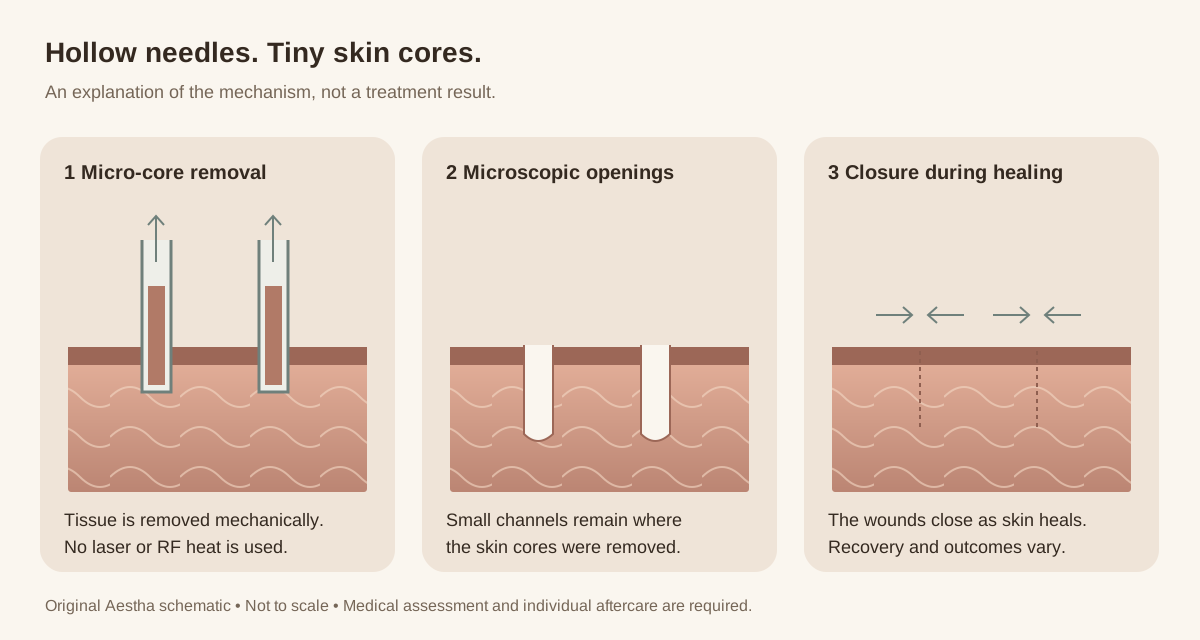
Ellacor uses hollow needles to remove microscopic columns of skin without laser or radiofrequency heat. It is a medical procedure considered for wrinkles in the mid and lower face. Unlike microneedling, it removes tissue rather than only making punctures.
UK availability checked 27 October 2026: Aestha has not verified a UK clinic offering Ellacor. This is an information guide; local availability and UK device authorisation remain unconfirmed.
- Appointment
- About 30 minutes for treatment; allow extra time for assessment and anaesthesia
- Downtime
- A few days to weeks
- Results
- Develop over months; variable
- Typical course
- Individual plan after assessment
Assessment comes first. Ask about suitability and recovery, and give yourself time to consider the options before booking a procedure.
Available appointments
Choose a clinic and a time that works for you. The price below covers the listed appointment; check any course or assessment requirements before paying.
No appointments available here right now
You can still read the guide and compare clinics.
Your appointment, explained
What to expect
- A qualified medical professional assesses the skin, your medical history and whether treatment is appropriate.
- After cleansing and anaesthesia, the handpiece removes tiny skin cores. The small openings then close during healing.
- Ask for written information about the device, risks, recovery, total course cost and follow-up before deciding.
How it feels
Anaesthesia is used. Pressure, tenderness and discomfort are possible; discuss pain control with the treating clinician.
Downtime
Recovery can take a few days to weeks, depending on the person and settings. Redness, swelling, bruising, crusting and visible marks can occur. Ask for an individual estimate before arranging work or social plans.
Results
When you might see a change. Changes are assessed over the months following treatment. Early swelling does not show the final result. A small prospective study followed facial wrinkle outcomes to around six months; results vary.
How long it might last. Long-term durability is not established by the six-month study. Skin continues to age, and a particular amount of tightening or a permanent result cannot be promised.
How often?
In the manufacturer's original clinical trial, most participants had three procedures roughly 30 days apart. That is a study protocol, not a course everyone needs. Further treatment depends on healing, benefit and clinical review.
Before your appointment
- Discuss scarring or pigment changes, skin conditions, allergies, medicines, bleeding problems and previous cosmetic treatments.
- Ask whether the exact device is authorised for the proposed use locally, who will perform treatment and how complications are managed. Do not stop prescribed medicines without advice from the prescriber.
Aftercare
- Follow the clinician's written wound-care and sun-protection instructions. Confirm when to restart makeup, exercise and active skincare.
- Contact the clinic promptly for worsening pain, spreading redness, discharge, fever or other unexpected changes.
Is it right for everyone?
The manufacturer's US indication covers adults aged 22 or over with Fitzpatrick skin types I–IV; that is not a UK authorisation. Evidence for darker skin types V–VI remains limited. Pregnancy, nursing, active infection, healing problems and certain skin conditions can exclude treatment. Risks include infection, pigment changes, persistent marks, scarring and anaesthetic complications.
Common reasons people book
- A medical assessment of moderate or severe wrinkles in the mid and lower face
- Comparing tissue-removing micro-coring with microneedling and energy-based treatments
What your practitioner will confirm
Confirm the exact Ellacor model, local regulatory status, practitioner training, suitability and aftercare. UltraClear laser coring is a different technology and should not be presented as Ellacor. No UK price or appointment is implied by this guide.
Treatment details are a general guide. Your practitioner will confirm what is suitable for you, the exact treatment plan and aftercare.
Sources and review information
Source-checked 2026-10-27. Qualified clinical review is pending.